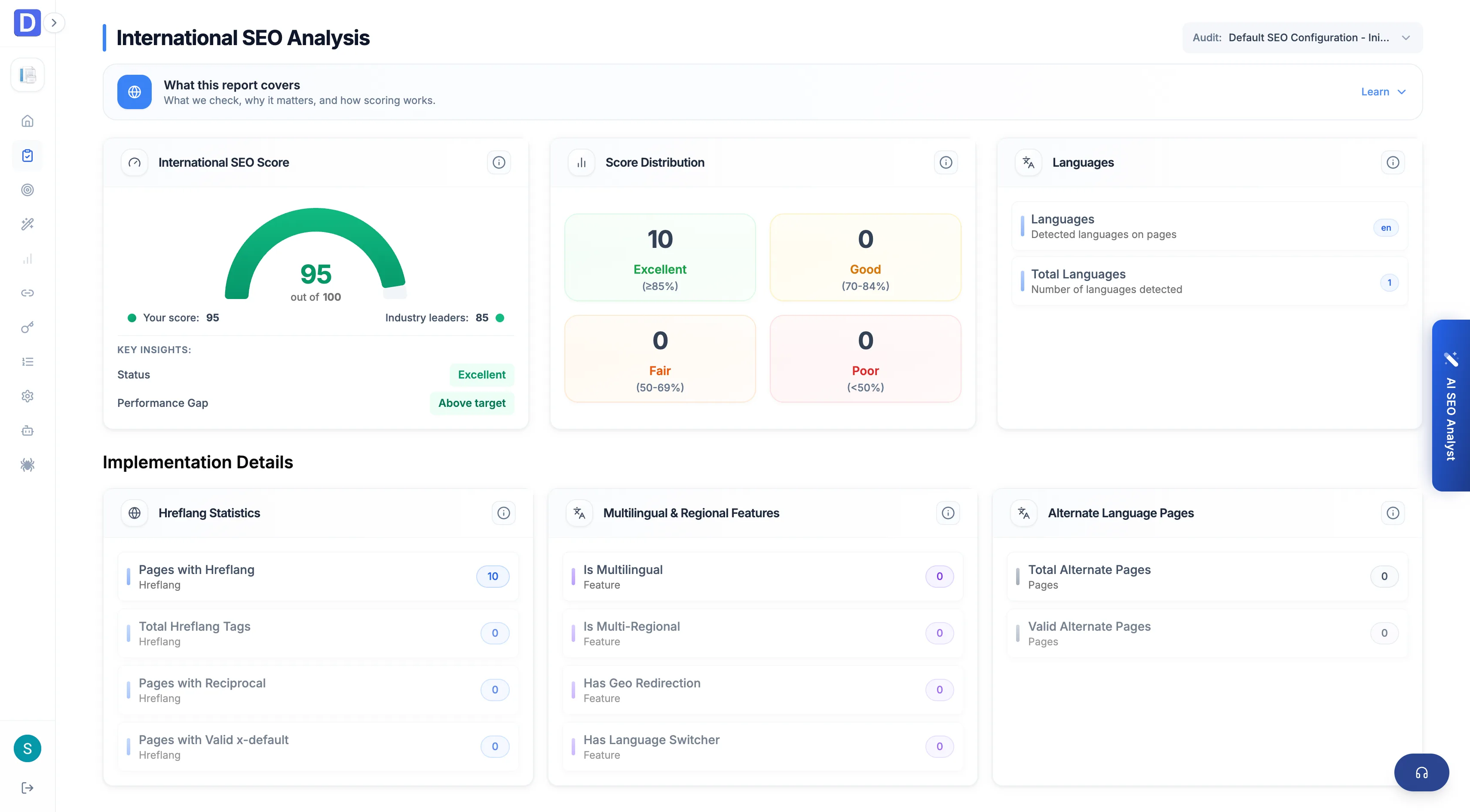
International SEO report
The International SEO report scores hreflang setup and language and region coverage across the site.
The International SEO report scores how well a site serves multiple languages and regions. Its core concern is hreflang. That markup tells Google which language and region each page targets, so the right version reaches the right searcher. It also avoids duplicate-content penalties across translations. The report appears once Internationalization is enabled in the audit configuration.
Score and hreflang
The report opens with an International SEO score and its distribution across pages, driven largely by hreflang implementation.
- Hreflang statistics — the count of hreflang tags and alternate language pages detected, and whether an x-default is declared to catch unmatched locales
- Implementation method — how hreflang is delivered (HTML tags, HTTP headers, or sitemap), and whether a language switcher is present
Languages and regions
Beyond hreflang, the report reads what the pages actually declare and target.
- Languages — the primary and content language detected, and whether the site is multilingual or single-language
- Regional distribution — whether the site is multi-regional or single-region, and whether geo-targeting is present
- Multilingual and regional features — the supporting signals that back a correct international setup
This report requires the Internationalization module to be enabled in the audit configuration. Without it, the report stays locked even after an audit run completes.
Hreflang has to be reciprocal: if page A points to page B as its French alternate, B must point back to A. Missing return tags are the most common hreflang error, and they void the whole relationship — check both directions when the score drops.
A per-page detail view breaks hreflang and language analysis down for a single URL. An AI International SEO analysis insight reads the findings back as next steps.